File synchronization plays a quiet but critical role in daily digital life. People in the United States move files between laptops, desktops, phones, and home servers constantly. While cloud platforms exist, many users now look for cloud storage alternatives that offer speed, privacy, and full control over their data. That growing demand is why Syncthing vs Resilio remains a popular comparison.
Both tools sync files directly between devices without storing data on third-party servers. However, their philosophies differ sharply. One emphasizes transparency and ownership. The other prioritizes speed and professional convenience. Understanding these differences helps you choose the right tool for long-term file management.
What Is Syncthing and How Does It Work?
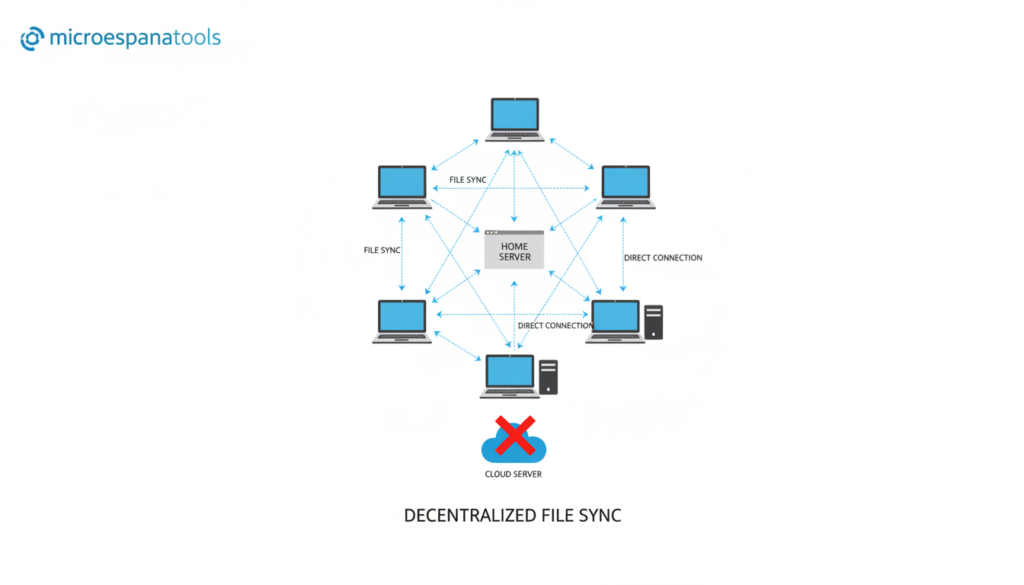
Syncthing is a free, open-source file synchronization tool built for people who value control. It connects devices directly using encrypted connections. No central server holds your files. Everything stays on hardware you own.
Because it operates as a peer-to-peer file transfer system, Syncthing removes reliance on cloud providers. Files sync automatically once devices connect. This design improves data privacy and security and reduces exposure to external breaches.
Learn more about open software principles from the Open Source Initiative:
https://opensource.org
What Is Resilio Sync and How Does It Work?
Resilio Sync uses BitTorrent technology to move files quickly and efficiently. Instead of sending entire files at once, it breaks them into pieces. These pieces travel in parallel between devices.
This design makes Resilio extremely fast, especially when syncing large folders. Many professionals choose it for media projects and backups. The comparison of Syncthing vs. Resilio often begins with speed, as Resilio consistently performs well under heavy workloads.
BitTorrent’s core technology is explained here:
https://www.bittorrent.com
Syncthing vs Resilio: Core Technology Differences
The technical foundation shapes how each tool behaves. Syncthing uses its own encrypted protocol. Because it is open source, developers worldwide review and improve it. Users can verify exactly how data moves.
Resilio Sync relies on the BitTorrent protocol. This allows efficient distribution across many devices. For users syncing massive datasets, this difference strongly influences the Syncthing vs Resilio decision.
Ease of Setup and User Experience
Syncthing offers deep customization. You manually approve devices and folders. This flexibility appeals to users who enjoy self-hosted solutions and complete configuration control.
Resilio Sync focuses on simplicity. The interface feels polished and modern. Setup takes minutes. For beginners or teams needing quick deployment, Resilio often feels more welcoming.
Security and Privacy Comparison
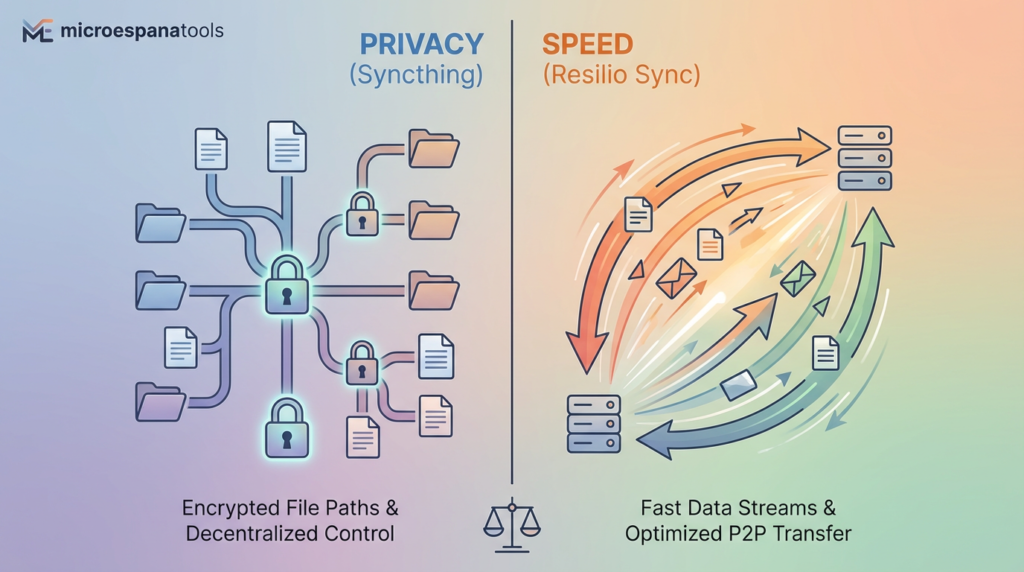
Security remains a top concern. Syncthing encrypts all transfers and never stores files externally. Its transparent design strengthens trust. Many users researching data privacy and security prefer this openness.
Resilio Sync also encrypts data in transit. However, it is closed source. Users must rely on the company’s implementation. Both tools are secure, but transparency gives Syncthing an edge for privacy-focused users.
For deeper encryption concepts, see Cloudflare’s guide:
https://www.cloudflare.com/learning/ssl/what-is-encryption/
Performance and Sync Speed
Speed becomes critical with large files. Resilio Sync excels at large file transfers due to BitTorrent’s segmented syncing. Video editors and backup workflows benefit greatly.
Syncthing handles everyday syncing well. However, extremely large folders may sync slower. In many benchmarks, Resilio leads the Syncthing vs Resilio speed comparison.
Platform Support and Device Compatibility
Both tools support Windows, macOS, and Linux. They also run on NAS systems. Mobile access expands usability.
Syncthing runs reliably on Android and integrates well with home servers. Resilio Sync offers polished official apps across platforms, making it easier for users who want consistent experiences.
Pricing and Licensing Differences
Syncthing remains fully free. There are no subscriptions, limits, or feature locks. This makes it ideal for individuals and families.
Resilio Sync uses a freemium model. Basic syncing is free. Advanced features require payment. Pricing often becomes decisive in the Syncthing vs Resilio debate.
| Feature | Syncthing | Resilio Sync |
| Cost | Free | Free + Paid |
| Source code | Open | Closed |
| Speed | Good | Excellent |
| Advanced features | Moderate | Extensive |
Use Cases: Which Tool Fits Which User?
Syncthing works best for users who want a private cloud setup without ongoing costs. Developers, privacy advocates, and self-hosters value its independence.
Resilio Sync fits businesses and creatives. Teams syncing high-resolution video or backups benefit from speed and reliability. This difference defines Syncthing vs Resilio clearly.

To explore private cloud concepts further, see:
https://www.cisa.gov for broader cybersecurity best practices.
Reliability and Offline Syncing
Both tools handle offline situations gracefully. Files sync automatically when connections return. This reliability supports travel and remote work.
Syncthing offers detailed version history. Users can roll back changes easily. Resilio Sync simplifies conflict handling. Advanced control often favors Syncthing users.
Community Support and Software Updates
Syncthing thrives on community support. Forums, GitHub discussions, and documentation provide quick answers. Updates arrive frequently.
Resilio Sync provides official support, especially for paid plans. Documentation is clean. Support depth varies by subscription.
Long-Term Maintenance and Scalability
Syncthing scales well for personal networks. It suits users focused on data ownership and long-term independence.
Resilio Sync scales better for businesses. Its performance remains strong with many devices. This often tips Syncthing vs Resilio decisions for organizations.
Learn why ownership matters here:
https://www.backblaze.com/blog/
Pros and Cons Summary
Syncthing delivers privacy, transparency, and zero cost. The interface may feel technical at first.
Resilio Sync delivers speed, polish, and advanced features. Full functionality requires payment. These trade-offs define the Syncthing vs Resilio choice.
Final Verdict: Syncthing vs Resilio Sync
There is no universal winner. Syncthing excels in control, privacy, and openness. Resilio Sync excels in speed, ease, and scalability.
If independence matters most, choose Syncthing. If performance and convenience matter more, choose Resilio. Understanding Syncthing vs Resilio ensures a confident decision.
FAQs: Syncthing vs Resilio
Is Syncthing safer than Resilio Sync?
Syncthing offers more transparency because it is open source. Many users trust it more for sensitive data.
Does Resilio Sync store files in the cloud?
No. Files sync directly between devices without third-party storage.
Which is better for beginners?
Resilio Sync feels easier at first. Syncthing rewards users who want customization.
Can Syncthing replace cloud storage?
Yes. Many users use it as a private cloud alternative.
Which tool handles backups better?
Resilio Sync performs better for large backups. Syncthing offers stronger version control.