

Tor vs Brave: Which Privacy Browser Is More Secure?
In an era where online tracking, data collection, and digital surveillance are rapidly increasing, privacy browsers have become essential for secure internet use. Unlike mainstream options, privacy-focused browsers are designed to minimize tracking and protect personal data. Two of the most popular solutions are Tor Browser and Brave Browser, both known for strong security features and user privacy. While Tor emphasizes complete anonymity through encrypted networks, Brave offers fast browsing with built-in protection against ads and trackers. Understanding how these privacy browsers work helps users choose the best browser for privacy based on speed, anonymity, and daily usability.
Browser Is More Secure?
Both tools promise safer browsing, yet they work in very different ways. One focuses on extreme anonymity. The other balances privacy with speed. Understanding how they differ helps you choose the right browser for your daily life.
Why Privacy Matters in Web Browsing
Privacy online protects more than browsing history. It shields your identity, habits, location, and personal preferences from invisible observers. Without protection, browsing history tracking allows advertisers to follow you across websites and build detailed profiles.
In the U.S., third-party data collection feeds marketing companies, insurance firms, and data brokers. This creates serious privacy risks online, including identity theft and financial fraud. A strong browser reduces exposure by enabling online privacy protection, fingerprinting prevention, and safer handling of cookies.
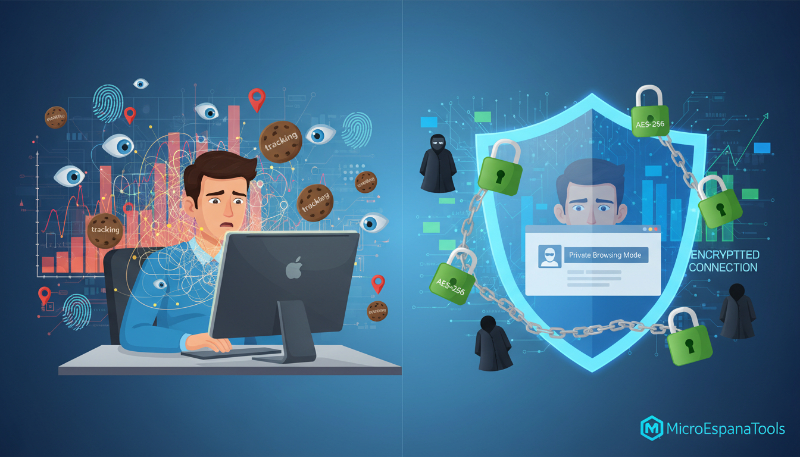
Many users believe incognito mode offers safety. In reality, incognito mode privacy only hides activity locally. It does not stop internet service provider tracking, which is why a true privacy solution matters.
What Is Tor Browser?
Tor Browser is an anonymous web browser created by the nonprofit Tor Project. It routes traffic through a global volunteer network called Tor network relays. Instead of connecting directly to websites, your data travels through multiple computers worldwide.
This system uses multiple encryption layers that scramble information at every step. Each relay knows only the previous and next hop. No single point sees your identity and destination together. This structure helps hide IP address data and supports censorship-free browsing.
Tor is widely used by journalists, activists, and researchers. It enables anonymous browsing online even under heavy surveillance. The browser blocks scripts, clears sessions automatically, and standardizes fingerprints to reduce tracking.
What Is Brave Browser?
Brave is a modern privacy-focused browser built for everyday users. It runs on Chromium, making it a familiar Chromium-based browser similar to Chrome. However, it removes Google tracking and replaces it with built-in privacy tools.
Brave blocks ads by default, creating an ad-free web browser experience. It actively block ads and trackers, supports private browsing mode, and upgrades insecure connections automatically. These features strengthen secure browsing online without complex setup.

Because it behaves like Chrome, Brave works smoothly with most websites. Many users choose it as a Google Chrome alternative or Safari alternative browser that delivers speed without sacrificing control.
Tor vs. Brave Browser: Which Is Better?
The debate over Tor vs Brave depends on what privacy means to you. Tor aims for anonymity above all else. Brave focuses on protection while keeping browsing fast and simple.
Tor hides your identity completely through encrypted internet traffic. Brave reduces tracking but does not fully anonymize users. This difference defines the entire browser security comparison.
Speed also separates them. Tor traffic moves slowly due to relay routing. Brave often ranks as the fastest privacy browser thanks to built-in ad blocking. Choosing between them becomes a clear privacy vs speed comparison.
Brave: Privacy with Training Wheels
Brave feels friendly from the first launch. You don’t need technical knowledge. The browser automatically prevent website tracking and blocks harmful scripts before pages load.
It offers features such as HTTPS upgrades, cookie isolation, and optional Tor private windows. For most Americans, Brave provides strong private internet browsing without breaking websites.
However, Brave cannot fully mask identity. Advanced fingerprinting techniques may still correlate sessions. While it enhances safety, it does not provide full anonymity like Tor.
Tor: Privacy on Steroids
Tor removes identity from the equation entirely. Every session resets. Cookies vanish. IP addresses rotate constantly. This design enables deep anonymous browsing online even under advanced monitoring.
Traffic travels through three or more relays using layered encryption. This makes surveillance extremely difficult and protects against location tracking. Tor remains one of the strongest online anonymity tools available.
The tradeoff appears quickly. Websites load slowly. Many pages block Tor users. CAPTCHA appears frequently. Tor delivers unmatched privacy but demands patience.
Brave vs. Tor vs. Popular Browsers: A Comparison
| Feature | Tor Browser | Brave Browser | Chrome | Safari |
| IP anonymity | Excellent | Limited | None | Limited |
| Tracker blocking | Moderate | Strong | Weak | Moderate |
| Fingerprinting resistance | Excellent | Moderate | Poor | Moderate |
| Speed | Slow | Very fast | Very fast | Fast |
| Usability | Difficult | Very easy | Easy | Easy |
| Best use | High-risk anonymity | Daily privacy | Convenience | Apple ecosystem |
This table shows why Tor and Brave dominate discussions around the best privacy browser.
Privacy ≠ Security (And Why Both Matter)
Privacy and security overlap but remain different concepts. Privacy hides who you are. Security protects your data from harm.
A browser can be private yet unsafe. Malware, phishing, and fake HTTPS pages still threaten users. True safety requires secure web connection standards, frequent updates, and sandboxing.

Using a VPN with browser tools can enhance protection, but VPNs alone cannot deliver anonymity. Browsers like Tor integrate privacy at the protocol level rather than routing traffic through one provider.
Real-World Scenarios: Brave vs. Tor
Consider public Wi-Fi at a U.S. airport. Brave protects against trackers and prevents ad injections. Tor goes further by hiding identity entirely.
When researching sensitive topics, Tor prevents correlation between searches and personal profiles. Brave still improves safety but may allow pattern analysis.
For online shopping or banking, Brave works smoothly. Tor often triggers fraud protection systems. Each browser excels in different daily situations.
Who Should Use Tor or Brave?
Brave suits everyday users who want privacy without frustration. It fits remote workers, students, and professionals seeking a reliable privacy-first web browser.
Tor fits high-risk environments. Journalists, activists, whistleblowers, and travelers benefit most. It remains ideal for users needing to bypass geo-blocked websites or operate under censorship.
Many experts recommend using both. Brave for daily life. Tor for moments requiring absolute anonymity.
Challenges and Limitations
Tor struggles with speed and website compatibility. Network congestion and relay availability can slow performance significantly.
Brave depends on Chromium updates, which may inherit ecosystem limitations. Incorrect settings can reduce protection levels.
Neither browser replaces smart behavior. Logging into personal accounts defeats anonymity instantly.
Conclusion: Which Browser Is Best for You?
The answer to Tor vs Brave: Which Privacy Browser Is More Secure? depends on your threat level.
Tor offers the strongest anonymity available today. Brave delivers excellent privacy with speed and comfort. For most Americans, Brave provides the best balance. For high-risk privacy needs, Tor stands alone.
In 2025, the smartest approach often combines both. Use Brave daily. Turn to Tor when privacy truly matters. This dual strategy delivers flexibility, safety, and control in a digital world that watches everything.